Cotton Today

Home Natural Resources › Soil

Bookmark and Share

Cotton & Natural Resources

Soil

Cotton growers are making great strides in reducing soil erosion, which, when unchecked, depletes one of agriculture’s most fundamental resources. A variety of farming techniques, such as conservation tillage – mixing and disturbing the soil as little as possible - and planting winter, or cover crops, have been modernized and improved upon to conserve soil by preventing erosion and by actually helping to encourage soil creation.

According to the U.S. Department of Agriculture (USDA), total soil loss on cultivated cropland across the country decreased by nearly 40 percent from 1982 to 2003. This trend is indicative of modern agricultural technologies that enabled the preservation of more soil and the concurrent development of higher-quality soil. [1]


Cotton Growing Systems and Techniques Conserve Soil Resources

Over the last 10 years, cotton has made great strides in reducing the use of tilling and in adopting the practice of growing winter or cover crops. [2] Scientific research shows that these improved conservation tillage practices dramatically reduce soil erosion, and actually bring these activities into balance with soil creation. [3]

Modern production practices allow cotton growers to achieve high levels of soil conservation and input efficiencies that both increase yield and reduce production cost. The environmental and economic benefits, coupled with mandatory regulations and requirements for compliance, are strong incentives for producers to take every practical measure possible to protect the soil. 

Cotton is highly tolerant of soil and water salinity (salt content) and can be grown with water and soil resources that would otherwise be unsuitable for other food, feed, and fiber crops [4] . Cotton's high level of tolerance of salinity lets producers make use of drainage or reclaimed water that otherwise would require environmentally-challenging waste disposal, [5] another achievement of modern farming technology in practice.

Conservation tillage

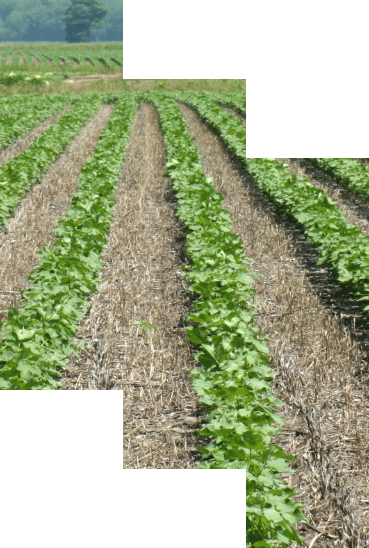
Conservation tillage, a modern farming technique, not only reduces soil erosion but also encourages the creation of new soil.

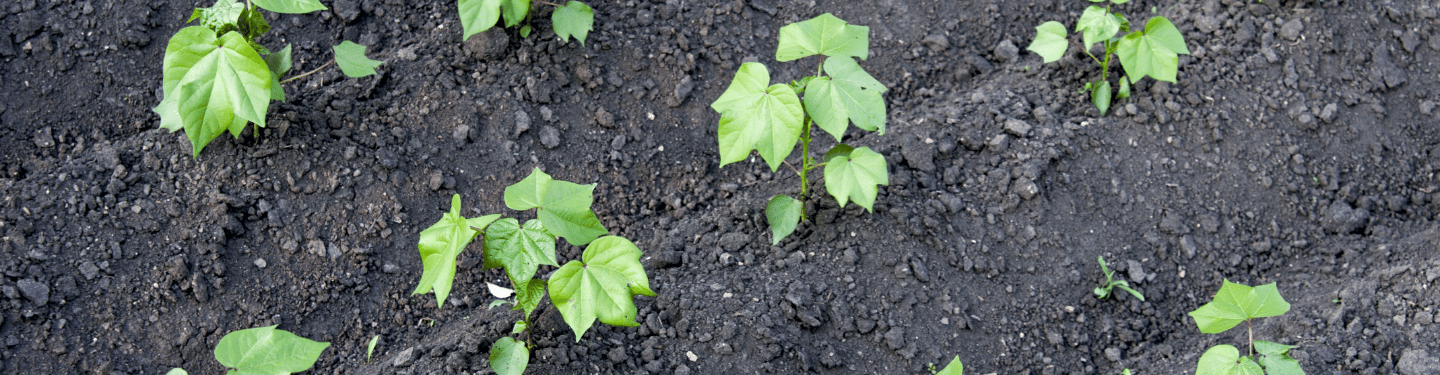
Residues from a pervious crop protect the soil surface while the cotton canopy develops.


^ back to top


Conservation Practices to Control Soil Erosion

The Dust Bowl days of the 1930s were times on the Great Plains of the U.S. when poor farm management practices combined with drought to result in huge soil losses due to wind erosion. During this period in American history the need for careful soil management was realized, and that need played a part in the creation of what is now called the National Resource Conservation Service (NRCS). The NRCS – originally called the Soil Conservation Service – is a part of the U.S. Department of Agriculture (USDA) and functions to develop conservation farming techniques and practices that help preserve the nation’s soil resources and assist growers in implementing these practices.

Modern agriculture now uses many management practices to preserve soil, such as:

  • Wind breaks - Planting trees in lines along crop fields to reduce wind erosion
  • Contour farming - Orienting crop rows perpendicular to the natural slope of the land to reduce water erosion
  • Conservation tillage - Preserving crop residue on the surface of the fields and reducing the number of tillage operations – i.e., decreasing the number of times fields are cultivated to control weeds or plowed to disturb the soil.

Through the years, erosion-control methods have remained fundamentally important to cotton growers to protect the soil surface and manage the influence of water and wind.

The implementation of erosion-control methods is not only vital in maintaining agricultural viability, but also is in the best interests of cotton growers for financially sound economic development and sustainability for the generations ahead. The cost to replace soil functions and remedy off-site damage due to soil erosion has been estimated at $19 per ton of soil; however, the cost caused by productivity losses is even greater. [6]

An agricultural scene

An agricultural scene from the early 1900s before conservation practices were in place. Photo courtesy of USDA’s Natural Resources Conservation Service.

Contour plowing

Contour farming is the modern agricultural technique of orienting crop rows perpendicular to the natural slope of the land. This practice reduces water erosion of soil. Photo courtesy of USDA's Natural Resources Conservation Service.

^ back to top


Conservation Tillage: preventing erosion and improving soil quality

In agriculture production, the two guiding principles of soil preservation are: 1) minimize topsoil lost to erosion; and 2) improve soil health. Typically, both of these objectives are accomplished by increasing organic matter with winter/cover crops and minimizing the amount of tillage used on the soil.

To control weeds and diseases, traditionally producers were forced to remove all plant residues and weeds from the soil surface prior to planting, and then continue to cultivate the soil while the crop was growing to control late emerging weeds. While tilling does control some disease and weeds, it also loosens the soil … Today, thanks to seed treatment fungicides, herbicides and herbicide tolerant cotton, diseases and weeds can be controlled without tilling, allowing what is referred to as "no-till" and conservation tillage systems to be adopted.

Cotton has made great strides in reducing tillage and using winter, or cover, crops. The number of acres of cotton produced with reduced-tillage systems has been increasing for the last 10 years. In addition to preserving the soil, reducing tillage significantly reduces fuel use and its associated cost to growers.

Contour plowing

Cotton has made great strides in reducing tillage for the last 10 years. These data were compiled by the Conservation Tillage Information Center in cooperation with the USDA National Resources Conservation Service. (National Crop Residue Management Survey Conservation Tillage Data).

The data above is from a national survey that is no longer conducted; however, in 2008 Cotton Incorporated conducted a survey of US cotton producers and found that approximately two-thirds of the respondents indicated they were using some form of conservation tillage system.

^ back to top


Sustaining Soil Fertility

In addition to carbon dioxide, water and sunlight, all plants need mineral nutrients to grow. The primary nutrients are nitrogen, phosphorus, and potassium. Other secondary and micronutrients also play a role.

There are various methods to meet the fertility requirements of cotton, including the use of nitrogen-fixing cover crops, manures and soluble fertilizers. While alternative sources to soluble fertilizers may seem a sustainable solution, relying on them as a sole source of fertility can compromise yields or lead to the leaching and runoff of nutrients, because the timing that will impact the release of the nutrient to the plant has a high level of uncertainty.

Excess Nitrogen is particularly prone to leaching and runoff and has become a water-quality concern for agriculture. For cotton producers, this is a fiber quality, financial and an environmental issue. Excess Nitrogen delays harvest which generally reduces fiber quality. Nitrogen that leaves the field does not get used by the plant and becomes, literally, money down the drain. Nitrogen contamination is a real concern, and highly advanced scientific calculations are used to practice the most accurate application of this element.

^ back to top


Modern Production Practices Preserve Soil Resources

In addition to the tremendous progress that has been made in reducing tillage operations and encouraging organic matter increase in the soil, other modern technologies are also being used to detect and manage crop nutrient needs, including Global Positioning System (GPS) receivers, multi-spectral images and ground-based sensors to map out soil property variations in the field.

The use of these combined technologies is often referred to as "precision" or "site-specific" agricultural management – "precision ag" for short. Although basic soil properties, such as soil texture, cannot be changed outright, more accurate and advanced measurements leads to increased efficiency and productivity. Today, almost 73% of U.S. cotton growers indicate that they employ some type of precision technology in their management, with most reporting that they use it for the site-specific application of soil nutrients. [7]

One precision ag approach is to use a ground-based sensor (such as an electrical conductivity, or EC, sensor) to map the variability present in soil type within the field.

The Veris Electrical Conductivity Sensor is a modern agricultural tool that is used to test soil electrical conductivity and soil texture, a factor which has a major impact on agricultural productivity, including water holding capacity, topsoil depth, and nitrogen-use efficiency. This is an effective way to map soil texture because smaller soil particles such as clay conduct more current than larger silt and sand particles. Soil EC measurements have been used since the early 1900s, and the process is now mobilized and aided by GPS.

As the cart containing the EC sensor is pulled through the field, one pair of coulter-electrodes injects a known voltage into the soil, while the other coulter-electrodes measure the drop in that voltage. The result is a detailed map of the soil texture variability that guides growers’ crop selection and zones. Soil samples are taken to analyze the nutrient need of each soil type present.

Once the map is created, it is loaded into the fertilizer applicator controller and then each soil type receives only the amount of nutrient that is required in that area of the field. This insures over-application does not occur and assures that crop needs are met.

The latest research effort is focusing on the use of sensors to detect the condition of the crop and vary the amount of nutrient applied in fields in real time. This eliminates the time spent creating and loading maps, and will provide even greater precision by letting the plant signal its individual needs.

Veris Electrical Conductivity Sensor

The Veris Electrical Conductivity Sensor is a modern agricultural tool that is used to test soil electrical conductivity and soil texture.

Mobile soil mapping platforms

Mobile soil mapping platforms


Map of variation in soil type

Map of variation in soil type in a 40-acre cotton field in Arizona. Each numbered polygon represents a unique soil type that will receive soil-specific inputs.

Sensor

Example of a sensor mounted on an applicator to control the amount of product that is applied, based on crop need.

Applicator machine equipped with crop-sensing units

This applicator machine is equipped with crop-sensing units.


^ back to top


U.S. Environmental Regulations for Soil Management

For cotton growers, maintaining soil resources has a big impact on how productive their land will be and how economical their products will be. But, beyond just being a fiscally sound idea, preserving soil quality is actually part of the United States’ federal environmental standards for soil management. Specifically, producers of "program crops," such as cotton, must submit a Conservation Compliance Plan to the U.S. Government for approval.

The 1985 Food Security Act introduced the Conservation Compliance and Sodbuster programs to minimize soil erosion. In 1995, 90 million acres of cropped Highly Erodible Lands (HEL) in the U.S. were subject to conservation plans. Approved plans are mandatory for any grower wishing to participate in the crop program, and enforcement is strict. Thus, for many U.S. cotton producers, sustainable practices are not only a good idea but also the law.

^ back to top


Erosion and Soil Quality Trends in U.S. Agriculture

Progress in preserving and increasing soil resource quality is not a trend limited to cotton production – it is part of the overall improvements resulting from modern agricultural practices applied to many crops. The following facts [8] apply to U.S. agriculture in general – not specifically cotton, but cotton is part of the overall positive trends cited below from information supplied by the U.S. Department of Agriculture (USDA) National Resource Conservation Service.

U.S. trends in soil erosion:

  • From 1982 to 1997, there was significant progress in reducing soil erosion on all cropland. Hillslope, or “sheet and rill,” erosion dropped by 41 percent during this time period. Wind erosion dropped by 43 percent.
  • This progress translates to a savings of more than 1.2 billion tons of soil per year on cropland.
  • From 1982 to 2001 there was a 39 percent decrease in total acres of excessively eroding cropland.
  • From 1982 to 2003, as cultivated cropland was converted to other land uses, such as the Conservation Reserve Program (CRP), the highly erodible cropland (HEL) acreage decreased by 27.8 percent and the non-highly erodible cropland (NHEL) decreased by 13.4 percent.
  • From 1982 to 2003, total soil loss on cultivated cropland (NHEL and HEL combined) decreased by 39.2 percent, from 462 to 281 million tons. The erosion rate on all cultivated cropland decreased by 31.8 percent. These reductions are likely due to the decreasing acres of HEL and the application of effective conservation practices during the time period.

U.S. trends in soil quality:

  • The amount of cropland managed using methods to improve soil organic matter increased by 46 million acres between 1982 and 1997.
  • Soil organic matter plays a key role in the physical, chemical and biological health of soils.
  • Residue Management is the primary practice for increasing organic matter.
  • Residue Management reduces fuel consumption by an average of 3.5 gallons per acre.
  • Increased surface residue forms a physical barrier to wind and water erosion
  • Soil organic matter holds 10 to 1,000 times more water and nutrient than the same amount of soil minerals.
  • A 1 percent increase in organic matter can add nearly 2 acre-inches more water holding capacity.
  • Crops are better able to withstand drought when infiltration and water-holding capacity improve.
  • Wildlife habitat improves when residue management improves.

^ back to top


Did You Know? Facts About Cotton and Soil Resources

Cotton is able to thrive in marginal soils.

Uninformed observations about cotton planting and soil fertility in the U.S. led to the erroneous conclusion that cotton production decreased the fertility of the soil upon which it was planted. The myth of cotton being "hard on the soil" or "a heavy user of soil nutrients" derives from two long-standing and appropriate farming practices: the selection of crops suited for specific soils and the allocation of limited resources to maximize economic return.

During the 1800s the limited distribution capability of agricultural commodities dictated that each farm produce a diverse array of crops to meet the local food needs, to feed the livestock needed for tilling the soil, and to generate income. Thus, farms would plant a mixture of pasture crops, vegetable crops, grain crops and cash crops.

The cotton plant was well known at the time to be tolerant of soil infertility and its seed to be of high value as a fertilizer. [9] Thus, presented with an array of soil types and limited fertilizer resources, cotton was planted on the least fertile ground and its nutrient-rich seed, after being separated from the lint at the gin, was applied as a fertilizer to other crops, either directly or after being fed to livestock.

Over time this practice depleted the fields of nutrients that were planted on marginally fertile lands only with cotton, which further restricted the planting of higher-fertility demanding crops on these fields. To the casual observer, not familiar with farming practices, it appeared that cotton was "hard on the soil."

Cotton is commonly rotated with other crops.

Cotton can be grown continuously without hurting the soil. However, in most environments, it is common practice to rotate cotton with other crops to prevent build up of specific pests, particularly a nearly microscopic one in the soil called nematodes.

Cotton field

The cotton plants pictured above are in a field at the University of Missouri Delta Center where cotton has been grown continuously for over 46 years.

Cotton belt

Other crops grown in the Cotton Belt. 2006 data from the USDA National Agricultural Statistics Service.


^ back to top


  1. Conservation Resource Brief, Soil Erosion, Feb. 2006, Number 0602. USDA NRCS
  2. Based on data collected by CTIC (Conservation Technology Information Center) in cooperation with USDA Natural Resources Conservation Service and Local Conservation Partnership from 1990 to 2004.
  3. Montgomery DR (2007) Soil erosion and agricultural sustainability. PNAS 104:13268-13277
  4. Hanson, B., S.R. Grattan, and A. Fulton. 1999. Agricultural salinity and drainage. Oakland: University of California Division of Agricultural and Natural Resources Publication 3375.; Ayers, R.S., and D.W. Westcot. 1985. Water quality for agriculture. Food and Agriculture Organization (FAO) of the United Nations. FAO Irrigation and Drainage Paper 29.
  5. Goyal S.S., S.K. Sharma, D.W. Rains, A. Lauchli. 1999. Long-term reuse of drainage water of varying salinities for crop irrigation in a cotton-safflower rotation system in the San Joaquin Valley of California: A nine year study: I. Cotton (Gossypium hirsutum L.). Journal of Crop Production 2(2):181-213
  6. http://www.soilhealth.com/organic/
  7. Roberts, R.K., et al. 2006. Use of precision farming technologies by cotton farmers in eleven states. In Proceedings of the 2006 Beltwide Cotton Conferences, San Antonio, TX, Jan. 3-6. pp 288 - 295.
  8. Conservation Resource Brief, Soil Erosion, Feb. 2006, Number 0602. USDA NRCS and Conservation Resource Brief, Soil Quality, Feb. 2006, Number 0601. USDA NRCS. Available online at: http://www.nrcs.usda.gov/ feature/ conservationresourcebriefs.html
  9. True, A.C. (1896) The Cotton Plant: Its History, Botany, Chemistry, Culture, Enemies, and Uses. U.S. Department of Agriculture Bulletin No. 53. An excerpt from that bulletin reads: 'The small demand made by cotton as compared with other crops upon the plant food of the soil was moreover, well known and the best lands of the Southern plantations - those which were naturally more fertile - were as a rule reserved for corn, wheat and other supply crops. For the same reason, home or stable manures were devoted to the corn and grain lands and practically none applied to cotton. Stable manure and cotton seed were used to considerable extent upon gardens and under grain crops, but only in rare instance with cotton.
 

A Global Solution for the Future

Envision a future where environmental sustainability thrives along with the businesses that depend on cotton as a source of income.

Multimedia Center

Ask the Sustainability Desk

Is it true that cotton uses a large amount of water compared with other crops?
No. Cotton’s overall water use is not that different than other major crops.